Showing posts with label Combat/ Tactics. Show all posts

Thursday, June 6, 2024

"Upgrading" Pocket Pikes - An Appeal

by Jason "Aeston" Rosa 

The concept of the "pocket pike" (sometimes called the sleeve pike) is not new. In fact, it's probably over a decade old, first conceived and implemented by Ashenmark. As soon as I experienced the original design, convinced of it's superior safety, I immediately made up three bamboo pikes that followed that schematic and for years used them at war events and questing events alike. Since that time, in 2018, the "pocket pike" design became Omnibus-mandatory for bamboo-core pikes, and rightly so.

Even though pocket-pikes are widely used, I believe they can be made to a higher safety standard to reduce the number of pike injuries that occur, especially at high intensity events. In order to help the Realms in that endeavor, Gilded Lion Ironworks will be producing pocket pike upgrade kits to help reach this elevated construction standard. 

First, a to-scale schematic of how a pocket pike is assembled using the Gilded Lion Ironworks Pocket Pike Kit. 


There are a couple things to highlight here that I believe are new "best practices" in safety without specifically being required by omnibus rules.

This section is mostly justification through arithmetic. Fair warning. 

TLDR at the end of the bullet points.

In all of these cases I am comparing the above schematic to a pike made to the minimum Omnibus standards which currently require: a 3" squish tip, a 1/4" thick foam disk, a 3" foam plug, and a 5" sleeve that starts beneath the foam disk (with no specific thickness requirement and not necessarily with the foam disk overlapping the sleeve by rule).

  • The squish tip is overall larger in all three dimensions. It is an inch longer than the Omnibus minimum and also extends out to an expanded profile just like the 1/2" camp foam disk (more on that below). This increases the surface area of the tip from just under 4 square inches to over 8 square inches. This increases the overall volume of the squish tip from about 29 cubic inches to over 57 cubic inches. That is a lot more padding to hit with and a lot more foam with which to absorb force.
  • The camp foam disk extends to the outer edge of the camp foam sleeve. This larger size foam disk increases the surface area (like above) from just under 4 square inches to over 8 square inches so the force that is transferred to the disk from the squish tip is distributed across a wider area.
  • The force, once transferred from the larger foam disk to the rest of the weapon, is then transferred to not just the foam plug and pipe foam but also to the entire sleeve. Just in calculating the 3 inches of pike below the camp foam disk, thats an increase in foam volume from about 29 cubic inches to about 47 cubic inches, which is significantly more foam to absorb that force.
  • More exactly, the percent of the force that is transferred specifically to the foam plug changes from 61% to a notably smaller 37%. This means less punishment to the weakest part of the weapon. 
  • Stress points are created whenever surfaces meet and can push against one another laterally. There is, of course, a stress point where the foam plug meets the bamboo and is a notorious known break-down point in any kind of weapon. There is a lesser stress point where the bottom edge of the camp foam sleeve meets the pipe foam. By making the camp foam sleeve 3" longer these two stress points are moved further away from one another increasing the overall durability of the entire weapon head. 
TLDR: Increasing the length and size of these pike tip components creates more surface area and volume to distribute the force and is therefore safer and more durable.

I should take a moment to point out that this voluntary new standard of pike safety isn't something that's come entirely out of the blue. When bamboo pikes were voted into the game in 2018 we made the best decisions we could, informed by experienced builders and fighters, to maximize their safety. In the years afterwards we've gathered much experiential data. The changes above, made via the consultation with several pike-users across the community, constitute the next logical step in safety design. It's been long enough since the implementation of these weapons that we examine critically how we can do better and make a change.

I think it would be unreasonable of me to insist that we all rebuild our pikes without providing some significant help to those who want to try. So the newly introduced Gilded Lion Ironworks is now producing a Gilded Lion Ironworks Pocket Pike Kit to help anyone who wants to upgrade their pike or build a new one to these standards!

All of the components of that kit can be seen below.


This kit will be provided at cost for anyone who wants to use it to create or upgrade one of their pikes, we are not seeking to make a profit on it.

Notably, with this kit, you will receive the following sticker.


Building or upgrading your pike with an unmodified Gilded Lion Ironworks Pocket Pike Kit will give you the right to place this sticker somewhere near the base of the foam on your weapon. This sticker is a marshaling tool that will be used by combat marshals for Queen of Hearts going forward.

Starting next year, in 2025, all pikes used at Queen of Hearts must conform to the higher safety standards achieved by the Gilded Lion Ironworks Pocket Pike Kit. It would be nice if pikers could try to achieve this goal by this summer's Queen of Hearts but we know that it is too close to reasonably require it of everyone.

This does NOT REQUIRE that you specifically use our kit to upgrade your pike. As long as you are reaching or exceeding the standards specified in this article you can create all your own components and then ask for your pike to be inspected to acquire one of the above stickers.

For THIS year's Queen of Hearts (2024) Kyle (Killian) and Paul (Grindin) have extremely graciously volunteered to build and bring a number of upgraded pocket pikes to the event for both teams to use, though their use will be strongly requested it will not be mandatory.

We know that the increased amount of and intensity of combat at Queen of Hearts leads to greater injuries overall, even if everyone is doing their best to be careful. The close quarters, fatigue, and emotions can combine in unfortunate ways. This elevated pike standard is an attempt at increasing overall safety with very little appreciable downside other than some labor and material costs.

Please reach out with any questions.

If you would like to secure a Gilded Lion Ironworks Pocket Pike Kit in the coming weeks, please let me know. We plan to start distributing them in June. They will be available at Rowan's Rarities (fine purveyor of Gilded Lion goods) in limited quantities so to secure more than one kit at a time it's probably best to reach out to me directly.

In service,
Jason


Monday, May 30, 2022

Battlecry!

 Battlecry!


This is a weekly bulletin for practices in the Realms.  Practices are one of the most important facets to the Realms, it is a place where many people are introduced to the game, as well as a place to enjoy the company and meet new members of the community.  Even if you are not a fighter, it is still a great form of exercise, as well as a way to hone your combat skills, which is an important skill for helping out at events while NPCing.  A lot of what makes a great combatant in the Realms has to do with muscle memory and building a good intuition for combat, which can only happen with consistent practice, so make sure to try and stop by your local practice as often as possible


Monday


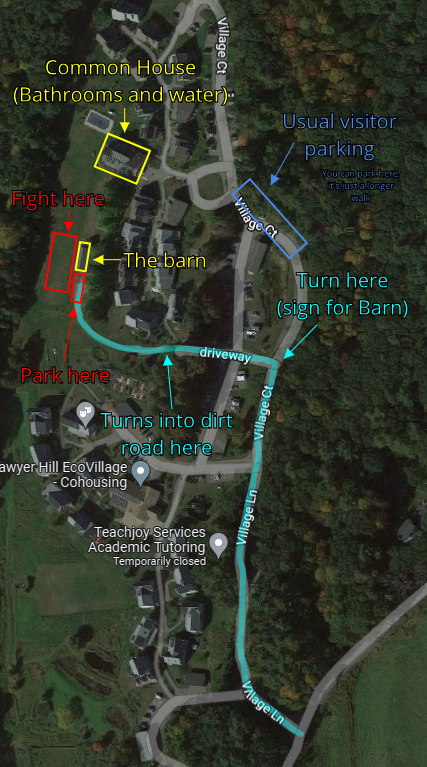
Camelot Fight Practice (https://www.realmsnet.net/events/1858)

7:30pm-9:30pm


Details

  • Practice consists of a mix of individual and group combat.

  • Water refills are available if need be, bring your own container.

  • Public restrooms available on site.

  • Loaner weapons are very limited, plan on bringing your own.

  • Masks are optional.

Important Notes

  • Practice is still planned for this week, keep an eye on discord for updates.

  • This site is part of a neighborhood. Please be respectful of the people who live here.


Weather

  • A hot evening with partial cloud cover and in the 80’s, make sure to hydrate.

Tuesday


Western Massachusetts Fight Practice (https://www.realmsnet.net/events/1857)

6:00pm-8:00pm - West Street Playground, Ludlow, MA


Details

  • Practice consists of a mix of individual and group combat.

  • Loaner weapons are/are not available?

  • Water is not available, bring your own water.

  • Public restrooms are available on site.

  • Masks are optional?

  • This is outdoors and inclement weather is very likely to limit attendance.

Important Notes

  • None this week.

Weather

  • It’s going to be in the low 80’s high 70’s, with a small chance of isolated thunderstorms, so keep an eye on the weather as we get closer.

Wednesday


Nashua Blackwood Fight Practice (https://www.realmsnet.net/events/1857)

4:00pm-8:00pm -Greely Park (Concord St), Nashua, NH


Details

  • Practice consists of a mix of individual, squad, and line battles, as attendees prefer.

  • Loaner weapons are available.

  • There is no water on site, bring your own.

  • Public restrooms are available on site.

  • While a few people might be there around 4:00, 5:00 is a more likely time to get started.

  • We set up near the grills and tables on the West side of Concord St, just off the access road to the north of the public restrooms.

  • Masks are optional.

  • This is outdoors and inclement weather is very likely to limit attendance.

Important Notes

  • This week will involve a lot of matched weapon combat (tournament practice).

Weather

  • This week will be cloudy and in the 60’s with a chance of rain, keep an eye out for updates as we get closer.


Thursday


Central CT Fight Practice (https://www.realmsnet.net/events/1860)

6:00pm-9:00pm - Rye Street Park, South Windsor, CT


Important Notes

  • Practice consists of a mix of individual training and if attendees are interested, team combat and combat games.

  • Loaner weapons available.

  • Water fountains are available in season, best to bring your own drinking water.

  • Public restrooms available on site.


Updates

  • The location of practice may change slightly, check the Realmsnet listing before heading out to practice this week.

Weather

  • This week will be in the mid 70’s.


Stratham Hill Fight Practice (https://www.realmsnet.net/events/1859)

6:00pm-8:00pm - Stratham Hill Park, Stratham, NH


Important Notes

  • Practice consists of individual combat for the first half, and ditch style team combat for the second half.

  • Masks are optional.

  • Loaner weapons are available.

  • Water is available on site, but bring your own container.

  • On-site bathroom.

Updates

  • None this week.

Weather

  • This week will be in the high 50’s, and cloudy.


South Shore Practice (https://www.realmsnet.net/events/)

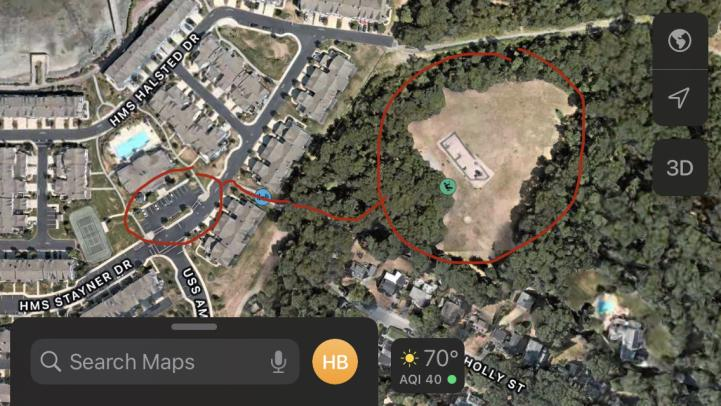
7:00pm-9:00pm - 138 Hms Stayner Dr, Hingham, MA


Important Notes

  • Most important thing is that this neighborhood has a lot of young kids so please be respectful of my neighbors with noise levels.

  • Park either at the place or on the street and then you can walk up the ramp to the park. 

  • Practice consists of individual combat for the first half, and ditch style team combat for the second half.

  • Masks are strongly encouraged but not required.

  • Loaner weapons are not available, be sure to bring your own.

  • There is no public water on site, so please bring your own.

  • There is no on-site bathroom.

Updates

  • None this week.

Weather

  • It will be warm and cloudy this week, in the low 60’s.  


Featured Drill: Aggression Training

This week we have a much longer form drill description, which was actually written by Realms legend, Dave Dolph/Sir Callin of Folkestone.  Although it is over a decade old, this article has some great information to help you kick your fighting skills up to the next level.  


Combat Aggression is a skill much the same as knowing how to hit an unarmored location or blocking with a shield. Similar to those skills, it can be taught and trained. It is of great use on the open battlefield and in a tourney, giving a combatant an edge in any fight.


What do I mean by Combat Aggression? I do not mean a wild, pell-mell attack. I do not mean charging your opponent and running them down. I mean a controlled system of attacks wherein you initiate the attacks as opposed to waiting to react to your opponent.


All too often I have seen fighters be hesitant; they hang back, withholding their attacks until they are sure of a successful strike. I have seen fighters swing only once and reset their stance or go immediately into a defensive position anticipating a counter-attack. I have seen fighters trap themselves into a completely defensive stance wherein they do nothing but block attacks upon themselves until eventually they miss one and lose the fight.


Why are some fighters lacking Combat Aggression? Part of it might be how they were trained. Part of it might be they are not naturally aggressive; it is not a part of their personality. Part of it might be a desire to not physically hurt their opponent. There can be many reasons why such is the case, but all these can be overcome.


Combat Aggression can be taught and trained. How? Glad you ask. This will take a trusting partner and some smaller weapons; I recommend a florentine set of 3’8” or a sword and shield combo. It is possible to try this technique with other weapon types but it works best with the above weapon styles.


In a nutshell; beat the crap out of each other. You and your partner should attack each other as much as possible without taking any of the shots that land on you. Also key to this technique is that you still continue to call out loud the shots that do hit you, but you do not take them. Continue to swing. Your goal here is to throw as many shots as you can, as safely as you can. You want to hit your partner as often as possible in as many locations as possible. Keep doing this until you are physically too tired to continue.


You do not want to hit your partner in an off target location; so no face or nut shots. You also do not want to hit your partner too hard. The idea here is to attack your partner as much as possible without stopping, but to do it in a controlled and safe manner.


What will doing this training technique get you?


-You will find your aggression level goes up. Attacking will become more natural for you.

-You will learn to place multiple shots on your opponent in a series of attacks, instead of only throwing one shot and then resetting your stance.

-You will learn to better call your shots while you attack. Some fighters are good at calling their shots when on the defensive but they can miss shots when their attention is focused on attacking. This exercise will help balance your focus between calling your shots and attacking.

-You will get used to getting hit by a weapon. Some fighters get timid about getting hit when the fight turns fast. This will help overcome that.


Is there a drawback to this type of training exercise? Yes. While this technique will help up your aggression it will diminish your instinct for self-preservation. In most fights, especially against the better fighters, ignoring a defense completely and going all out will get you killed. While this is an excellent training technique, it needs to be tempered with a good balance of attack and defense.


Also, please bear in mind that safety is still the primary concern in any fight. These training methods are fine with two people who trust each other and are willing to take the occasional bad shot. However, if you find yourself stepping over the line of safety you will need to rein in your aggressiveness and do some more practicing before going all out at a regular event. The key here is control and if you do not yet have that control then you are not safe.


Wednesday, July 17, 2019

Results from Tournaments of Blackwood


This year at Blackwood Tournaments we were celebrating the engagement and upcoming marriage of King K, and Sir Jinx. In honor of their future, and in the name of the celebration, we decided to have a Stag and Doe party for them up in Acteon. Naturally we named the teams after the Stag and Doe, and to go along with that our King, and future Queen got to pick the teams that would fight for their honor. Here are the results of those tournaments.


Group Battles

 Father of the Bride, Mother of the Groom 
Team Stag 

Survivor 
Team Doe 

King/Queen War 
Team Doe 

Blackwood Side Board
Team Doe 

Line Battle 
Team Doe 

Senchukulas ("Donut of Doom")
Team Stag 

Castle Defend 
Tie 

Castle Siege 
Team Stag 

Bridge Battle 
Team Doe 

Grand Melee 
Team Doe 


Individuals
V for Vendetta 
1 - Wrath 
2 - Daekara 
3 - Vuel

English Longsword 
1 - Wrath 
2 - Shader 
3 - Eldritch 

Obstacle Course 
1 - Scalar 
2 - Gordon 
3 - Herk 


Non-coms

Monopoly 
1 - Thoril 
2 - Elora 
3 - Valkyr 

Liars Dice 
 1- Valkyr 
2 - Thoril 
3 - Nova


Winner: Team Doe (45 points total)
Team Stag: 32 points

Tuesday, February 6, 2018

Thoughts on Speed pt 3

[Editor's Note: Catch up with what you missed -  Part I available here; Part II available here.]

I love the speed of our combat. I love the space where my mind goes, where I can understand how we move, where I know the relation of how fast a person can move, and the distance they have to travel. For me this is the heart of combat. Getting in the zone, and understanding the chaos of the world around me. Intuiting the things that normally I don’t even recognize that I perceive, and achieving flow state.

For me, this is kind of the elephant in the room on the topic of speed. That's because I have avoided, blatantly, the topic of muscle memory. You might wonder why muscle memory is the elephant in the room when you're talking about the speed of mind in fighting, but let me explain.

If you ask someone you consider to be one of the best fighters in the game, what, or how they think while they are fighting, they might describe a certain level of tactics, like creating openings, or being aware of stance, or positioning, but often they will say that they don't really think. That they in fact just sort of let themselves go, that their body knows what to do separate of the mind.

So then you find yourself asking some questions like “How do I separate mind and body?!” or “How do I let my body go on auto-pilot?” or maybe just “wtf?” Well that's the problem, muscle memory is sort of this ominous concept, that public forums don't really describe well. Your muscles don't remember things. It's kind of a misnomer. Some would rather describe it as a memory for your muscles,  that is something I can get behind.

Everything you read on muscle memory will emphasize on quality before quantity. They recommend to start slow, and make sure your motions are correct, and that your body is learning the correct motion, rather than some weird motion that isn't useful for what you're doing. This is why muscle memory will come up most often in sports like Golf, and arts like playing the guitar, more often than say, football. This is also a problem in our sport, where the combat is not broken down into a series of labeled moves, where we don’t have “rabbit punches” or “snake stance”, we’re made up of a jumble of things that people have brought to the game through the years via trial and error, or outside experience. With some notable exceptions, of course, like the “arm block” for example.

So what can you do? Fighting at half speed is a great way to practice your shots and blocks and allow yourself to process what the other fighter's openings are, and allow them to process and exploit your own. As good as it is for me, I hate this exercise. It really is the way to go, plenty of martial arts have been practicing slowly for thousands of years, learn the perfect step the right way, so that when you need to take it quickly, you take it correctly. I get it. You probably do too. But as I said, speed is my drug, and I would much rather be moving at some quasi-imperceptible blur than moving at half speed.

Is there another way to go about it? I'd like to think so, but it's more theory than time tested practice, like fighting at half speed, so you'll have to give me a bit of faith. I'm going to talk about pattern recognition.  I like to think of a good volley as a series of actions or behaviors. What I mean by a volley is a series of parries and attacks that lead to a fight being more than just a single strike and done.

I like to think of a fighter's stance as foreshadowing to the strike that they are going to make. Huh? Fighting is like a rainbow. What? Limited and infinite. Each stance can vary from person to person, infinitely, but each stance also is within a limited predictable spectrum of stances based on the idea that the human body can only move in a semi-limited fashion. So just like the rainbow, which is a representation of an infinite amount of colors, we can break down each color, or stance, into a limited set of categories which are weak against specific attacks, and lead to strikes from certain directions, and to certain openings in your own stance.

When you enter into a fight, you should look at your opponent and discern what their stance's weaknesses are. Really look. What does the positioning of their feet tell you? Do they lead with their weapon hand, or their off hand? Are they right handed or left handed? Do they guard their head? Remember that stance. After the fight, ask yourself, what was their opening swing? Where did it go?  The more often you do this, the faster the answers will come to you. The more people you fight, the more you will be able to recognize the variations between them.

Why is this important? What you're doing, essentially, is setting up a stimulus for yourself, and your actions are conditioned responses. Similar to Pavlov's dogs, where they began to salivate at the sound of a bell, you want yourself to react to openings in your opponent's guard, and block opponent's attacks based on the first instinct of their appearance. You want Stance A, to tell you to attack B, and have their block C lead you to attack D. And you want to recognize the difference between fighter 1's stance A and fighter 2's stance A as easily as you can switch between two different fonts.

Now you're probably thinking to yourself something about predictability. “If I answer Stance A with attack B every time, my opponents will notice.” Or something like that. You're right, they will, two things. First of all; you're already predictable, you're just worried about being -too- predictable. Secondly, the more patterns you teach yourself, the more your stimuli will generalize, you'll find yourself recognizing stance F in the middle of attack B, and changing attack B into attack G on the fly.

If you think of your opponent's action as a question, and your action as the answer, then you can also look at it this way. If I ask you the question, “What is 2+2?” you will probably answer “4”, right? That's because generally speaking, that's the answer a person is looking for when you ask that question, however, 2+2 also = 5-1, and an infinite other answers equally as well, but 4 is the simplest, best answer, and that is the one you should be looking for in a fight. This is why crazy theatrical, spin moves usually don't work within our system, without some crazy amount of deception going on, to give yourself the opening that you need to pull it off. Just as with 2+2, with practice, and years of answering the question, if you learn to recognize patterns, and ask yourself the right questions, you'll see the answer you need to any question an opponent can ask.

Essentially, if you want to be faster, you need to practice more. You need to work hard, and exercise, and you need to think and strategise. The secret to speed, is practice. Go to practice. Fight as many different people as you can.

I hope you enjoyed this mini-series as an introduction to speed in our game, and as always I hope to see you on the field,

Keith/Saegan


Wednesday, July 20, 2016

You're Doing It Wrong

Queen's War: You're Doing It Wrong.
By Mike "Panther" Palumbo

Photo by Jennifer DeNardis Rosa


Queen's war, a combination of gladiatorial showmanship and individual prowess and the closest our fighting comes to a spectator sport (or Thunderdome depending on your perspective). Two men enter, one man leaves. At least that's how it's been in recent years. If there is a third team, they typically aren't in the running very long.

But with this year's team caps, we will return to a time when three or more combatants enter the ring. In my time, I've seen a shift in the general etiquette within Queen's War. These days, if there is a third combatant, some seemingly noble warrior will gesture to the other two suggesting they fight first, and not backstab nor take advantage of any opportunity made by the battle between them. Not only is this wrong, but it was never done this way in the days of old (by that I mean early QoHs). Before you scream foul, no honor, old man, etc. etc. consider this:

It's a melee not a series of one-on-one fights.

When you treat it like a series of one-on-one fights it ceases to be a melee and becomes a bear pit, the loser of the first battle keeping their wounds for the next. We don't do it this way when we do team melee, we don't take turns. We expect teams to be opportunistic. It should be no different in an individual melee.

And let's examine that seemingly noble person who "lets" the others go first. That person gets a bye to the final round, so to speak. If there are three people, he only has to beat one to win, whereas the other has to beat two. And if the opponent has any wounds from the first fight, it's even easier for the "noble" warrior. Any odd number creates this scenario. Suddenly their noble intentions seem self-serving don't they? The truely noble thing would be to let the weakest (if that were obvious) have the bye while the big bad fighters duke it out first. But frankly, in this case, now you are insulting someone, having assumed them weakest. The only solution is to simply fight. Everyone just fight.

As the third man, I'm not saying you have to backstab, but you should be putting the pressure on the others and be within striking distance. Each combatant should be attempting to pinch one of the others while avoiding being pinched. You should be poised to take advatage of opportunities created by the engagment of the other two.

Queen's war is a melee, and melee tactics should be employed. No one should get a free pass because they suggest it. If that's not what the community wants, then it should be called Queen's Bear Pit.

Thursday, January 28, 2016

Order of the List 2016 Update by Tucker "Temorse" Noyes


We would like to thank everyone who participated or hosted tournaments for the 2015 season, it was a great year with some excellent competition. We would like to thank Creathorne for hosting the 5th Order of the List Invitational, as well as congratulate Justin “William” Burchell on his win this year and induction into the order.

 Additionally the Order of the List would like to formally announce our annual update for the 2016 season. There will no changes to the structure of how participants interact with events. We will continue to limit the total number of sanctioned tournaments per year, however this restriction will not be based on just the nation or group throwing it. Event-holders looking to run Order of the List sanctioned tournaments will now need to fill out the attached form in order for their event to be approved to award points for the Order of the List. We will make considerations primarily on the size and purview of the tournament being run, as well as the history of quality of the tournament and event holders. We will also consider diversity of the groups throwing tournaments, but it will no longer be a primary factor in that decision. 

We look forward to another great season ahead of us, and we hope that all of our competitors this year are ready to step up to the challenge and train hard in hopes of taking home the coveted title of 2016 Order of the List Champion!

The form can be found here.


2015 Top 16


2015 Top 16

2015 Winner: William (R); Runner-up: Guilliam (L)


 Photos by Ben Hamilton

Tuesday, March 24, 2015

Stay on Target - Realms Archery Part 3 by Carol "Charwindle" Eddy


PART 3: THREAT ANALYSIS


In a standard Realms war maneuver, a decent bow will have the range of the entire active field.  That means from the moment "lay on" is called, each and every enemy combatant is a viable target.  That's a lot of people you can shoot.  The aim of this section is to give some guidance on your target priorities.

(1) Know the battle pace.

An armored field battle is fast paced: you will die before you fire all your arrows. This means you want to shoot back to back as rapidly as you can On the flip side, an armored castle battle is slow paced: you will run out of arrows long before you're dead. In this case, you want every shot to count, and count fully, or you will "lose" the efficiency war with the enemy archers. Every arrow you fire at them that does not hit is an arrow they can fire back to kill. Extrapolating further, every arrow you fire at them that hits, but does something ineffectual - taking the leg of a pikeman, which is rapidly healed, for example - garners the same result.

In a line battle, you have less luxury of choice.  By default, you should shoot at the easiest targets to hit that present themselves to you.  This will narrow your options in the line to those closest to you; field positioning becomes vital. You will want to place yourself in a position that (1) offers many enemies close by, so you can fire arrow after arrow with no down time as you search for a viable target, and (2) provides a thick buffer between you and the enemy in the form of many friendly troops, which will give you more time to fire off your arrows and have an effect on the battle.  Essentially, you want to be right in, or right behind, the thick of battle.  Archers have a very low rate of fire compared to melee weapons.  Putting yourself in this position means you will be maximizing your rate of fire, every arrow will strike an open target, and you can maximize your contribution by providing it to the greatest number of your teammates in the middle field.  Additionally, because there is so much melee combat, few enemies will have the chance to focus on you.  Many enemies will not even be able to attempt a block because they will not see the arrow coming.  (More on this in the next session, Field Positioning.)

In a bridge battle, which does not have the same breakneck pace, you have the luxury of choosing your targets more carefully.  In general, as an archer, you want to weaken the biggest threats on the enemy line, which allows your friendly line to successfully push forward.

(2) You are playing the support role: choose targets that pose the largest threat to your team.

The general rule of thumb is this: shoot the longest weapons first.  In theory, following this maxim, your target priority would be:
archer > pike > 6' > 5'/4'6" > spear > florentine > shield > other.

The reality is slightly different.  One, you should not be targeting enemy archers unless a golden opportunity presents itself - ie, the archer is obviously not looking at you, and you have enough firepower (friendly archers) that you can burn through their armor and kill them with one volley.  Archers make poor targets in unlimited combat for four reasons:

1. They're mobile.  If you hit an armor and peel away a point of armor (or armored cloak), they will respond by immediately taking cover and getting the situation repaired.  It is difficult to kill an archer outright because they are not trapped in by the crush of melee bodies or required to hold a certain part of the field.  They will move somewhere else without affecting the heart of the battle.

2. They have low rate of fire.  Taking out an archer will help because they will not be able to harass your own line, yes, but a lone archer is not going to turn the tide of battle in the same way an aggressive pikeman or florentine fighter can mow down enemies.  The change will be incremental at best.

3. Archers will never cause a push.  This reason is closely related to #2.  While an archer can be a deadly and effective addition to any team, they are completely unable to charge, counterattack, or turn the tide of battle with a sudden aggressive move.  Archery may have the longest range, but it is also the most passive weapon combination.

4. Archers are the most likely to see the shot coming.  Because they themselves are looking for long-range targets and not at all concerned with close combat, they are already looking farther away than the average melee fighter, and are more likely to see your arrow coming.  Firing an arrow at an archer who is looking at you is, basically, a wasted shot: an archer will not be standing in melee range of an enemy, so when they focus on you, they will not open themselves up to getting struck by a sword, unlike a fighter enemy who not only has to contend with your archery, but also with the enemy line he is currently engaged with.  (A note: the best time to shoot an archer is when he is focused on aiming at another enemy, arrow to the bow and attention pointed completely in that direction.  This is also one of the reasons an archer should spend the minimum amount of time possible lining up a shot.)

If, in a bridge battle or choke point situation, an enemy archer is proving particularly effective, you might find it worth your while to target their bow. Bows can be repaired via repair item, but dedicated support casters would rather spend that spell keeping fighters up.  Breaking a bow is an effective way to take an archer out of combat for longer than just shooting them. If the archer repairs the item by hand, it will take them out of combat for a ridiculously long time.

Dropping archery from target priority, you are left with:
Pike > 6'6" > 5'/4'6" > spear / florentine / archer > sword/board > else.

If you do not know your opponents well, this is a good baseline to use.  It is always a good idea to shoot a greatweapon wielder. If he is slow on his feet and you are fast, you can peel 2 points of armor or even kill him.  On the flip side, it is usually a waste to shoot a shieldman in a line.  He will be able to secure a repair long before you get a second and third shot.

Because in a choke point you can choose your targets, the best option is to locate all of the enemy greatweapon wielders in the line, and then ~pay attention~. A s soon as they get struck by one of your team's pikes, put a second hit on them.  Yes, it is a brilliant and lovely thing to wait for a call of "armor 2!" before shooting and killing.  However, a good enemy pikeman will rotate off the line as soon as he loses a point of armor.  By shooting him immediately after the first blow lands, you will strip him of both points and give one of your pikemen - who has a higher rate of fire than you do! - a golden chance to bring him down.  (Coordinating archer fire from 2 archers also works here. Unlike casters crouching behind the enemy line, front-line pikemen can often be shot from multiple angles, making it easier to coordinate fire.)

(3) Controlling pace – eliminate aggressive fighters.

If you do know your opponents well, you will be able to refine your threat analysis.  A more aggressive target is always a greater threat than a passive target, because killing them buys you more time.  As an archer, time is your most precious commodity.  You will find that it is better to kill a very aggressive 5' than a passive 6'6", for example, or (in a line) to kill a fast-moving florentine fighter over a more cautious 5'.  In general, I have found you may shift a passive fighter down one category and an aggressive fighter up one category on your threat analysis.

In this way, in a chokepoint battle, an aggressive florentine fighter is an equal threat to a passive 5' fighter - but never more of a threat than a pike or a 6'6".

(4) Casters.

You will notice that casters are not mentioned on this threat list.  That is because casters are targets of opportunity.  They will often be hunkered down behind the enemy lines.  If you have an open shot on an active support caster, take it; if they have to spend the time getting their armored cloak back up, they are vulnerable to a push. If they do not spend the time to restore their armored cloak, they are just begging to die at the next opening you can shoot them.  A shot at an active caster is always worth it.

On the other hand, don't bother wasting arrows on people standing aimlessly in the back field.  It may help when you break through, but it won't help you to break through.  You are feeding the other team arrows they can use against more appropriate targets.

There are of course exceptions to this rule - but they are just that: exceptions.

To recap:
1) Shoot the longest weapons first (excluding archers),
2) Shoot aggressive fighters before passive fighters, sometimes even in defiance of Rule #1,
3) In an unlimited line, your shots are better spent towards the center (targets are not moving as fast / are not as aggressive); in a limited line, your shots are better spent on the flanks (slows the speed of battle),
4) Always take a free shot at a support caster;
5) Resist the temptation to shoot at an idle backfield.

The longer you spend time as an archer, the more you will learn to prioritize your targets for very specific and particular circumstances.  An article that tried to cover all these possibilities would go on for years and involve a fair bit of sheer hypothesis: my only advice is, follow the general rules of thumb when you go out on the field, and then - through trial and experience - perfect your own threat analysis by observing the ebb and flow of battles of different paces and different force compositions.